Making a Reusable Tea Strainer: Materials Compared and a Simple Step-by-Step Guide
Choosing a reusable tea strainer often comes down to materials and method. Each option has trade-offs in filtration, cleaning, feel, and longevity. Below is a concise materials comparison to help you pick an approach, followed by a step-by-step method for a simple sewn cotton tea pouch, then practical variations and troubleshooting tips.
Materials and trade-offs: brief comparison
Cotton muslin or tightly woven cotton
Pros: Readily available, inexpensive, easy to sew, neutral taste when washed, compostable at end of life. Good for most black, green, and herbal teas if the weave is tight.
Cons: Absorbs oils and stains; may dry slowly; repeated washing and heat can cause shrinkage or thinning. Not ideal for very fine teas unless layered.
Silk or fine natural fiber (e.g., linen)
Pros: Very fine weave can produce a cleaner cup with minimal particulate. Silk is gentle and unlikely to impart flavor.
Cons: More delicate and may require careful hand washing. Less heat-resistant than metal and often more expensive.
Stainless steel mesh (infuser balls, baskets)
Pros: Durable, easy to rinse and sanitize, quick to dry, very low ongoing cost. Suitable for very fine teas when paired with a fine mesh.
Cons: Heavier, requires a specific shape or manufactured component (not as straightforward to DIY), and metal can get hot in the cup. Some very sensitive palates notice a metallic note, though quality stainless minimizes this.
Silicone mesh or fine-mesh silicone pouches
Pros: Flexible, heat-resistant, non-absorbent, dishwasher-safe. Long-lived and easy to clean.
Cons: Can retain oils in crevices and may be harder to strain completely by hand. Not compostable.
Paper or single-use options
Pros: Convenient and disposable; predictably clean taste.
Cons: Ongoing waste and recurring cost; some paper may contain additives that affect flavor.
Step-by-step method: Sew a simple reusable cotton tea pouch
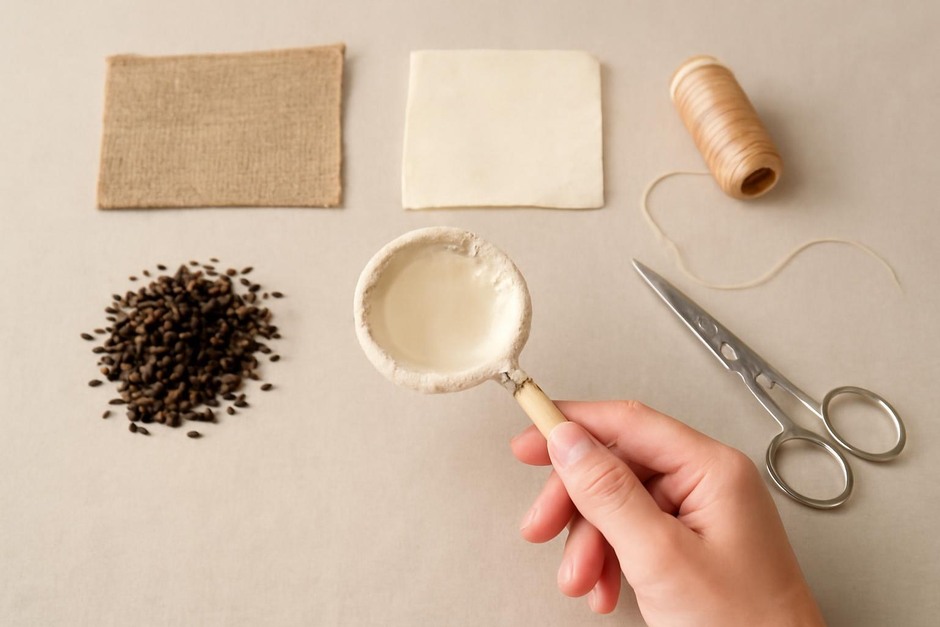
- Materials: Two squares of tightly woven cotton or muslin, about 12 x 12 cm each; cotton thread; needle or sewing machine; small cord or ribbon for drawstring (about 20 cm); scissors; pins; optional safety pin.
- Prewash: Wash and dry the fabric to pre-shrink and remove sizing. This reduces later distortion and ensures neutral flavor.
- Fold and pin: Lay the two fabric squares together, right sides facing each other. Pin three sides, leaving one short side open for the drawstring.
- Sew three sides: Using a 0.5 cm seam allowance, sew along the pinned edges. For strength, backstitch at the start and end. Trim corners to reduce bulk, being careful not to cut stitches.
- Turn right-side out: Reach through the open side and turn the pouch so the seams are internal. Press the edges flat with fingers or an iron on a low cotton setting.
- Create a casing for the drawstring: Fold the open edge inward about 1 cm, pin, then fold another 1 cm so the raw edge is enclosed. Sew along the folded edge to form a narrow channel, but leave a small gap to thread the drawstring.
- Insert the drawstring: Attach a safety pin to the cord end and feed it through the casing. Tie the ends of the cord together or knot them separately for easy opening.
- Use: Add 1–2 teaspoons of loose leaf tea (adjust for size and tea type), cinch the drawstring, and steep in hot water. Allow room for leaves to expand; overfilling reduces infusion quality.
- Care: Rinse immediately after use, then wash in warm soapy water or the washing machine. Air-dry thoroughly before storage.
Variations
- Double-layer for finer teas: Use three fabric layers or insert a fine silk lining to capture smaller particles when brewing green or rooibos teas.
- Stainless mesh frame: Sew the pouch to fit inside a small metal tea basket if you prefer the sturdiness of steel with the gentleness of fabric.
- Silicone pouch: If you prefer non-absorbent materials, purchase or mold a silicone pouch with a fine mesh; these work well for iced tea and travel but are less compostable.
- Cold-brew method: Use the same pouch for overnight cold-brewing in the fridge; fabric can release more residue with long cold steeping, so rinse promptly after use.
Troubleshooting
- Tea leaks through: For dusty or very fine teas, add an extra layer of fabric or switch to a finer weave like silk or a very fine stainless mesh.
- Strainer absorbs flavor or smells: Prewash several times, then soak in warm water with baking soda for 30 minutes to remove residues. Avoid strong-scented detergents.
- Fabric shrinks or distorts: Prewash and iron fabric before sewing. Use a slightly larger initial pattern if further shrinkage is expected.
- Drawstring slips or wears: Use a cord stopper or knot the ends and reinforce the casing seam. Replace the cord if frayed.
- Stains remain: Sun-bleaching or a short soak in diluted oxygen bleach can lift tannin stains; avoid chlorine bleach on delicate fibers.
Choosing a reusable tea strainer involves balancing filtration, ease of cleaning, and longevity. A simple sewn cotton pouch is an easy, low-cost entry point and can be adapted to other materials as your preferences become clearer. Each option has practical trade-offs; try one method, note what matters most to you, and adjust accordingly.